

Amit Saw Soap Residue Returning Around the Bathroom Fittings So He Contacted the Best Cleaning Service in Agra for Bathroom Deep Cleaning
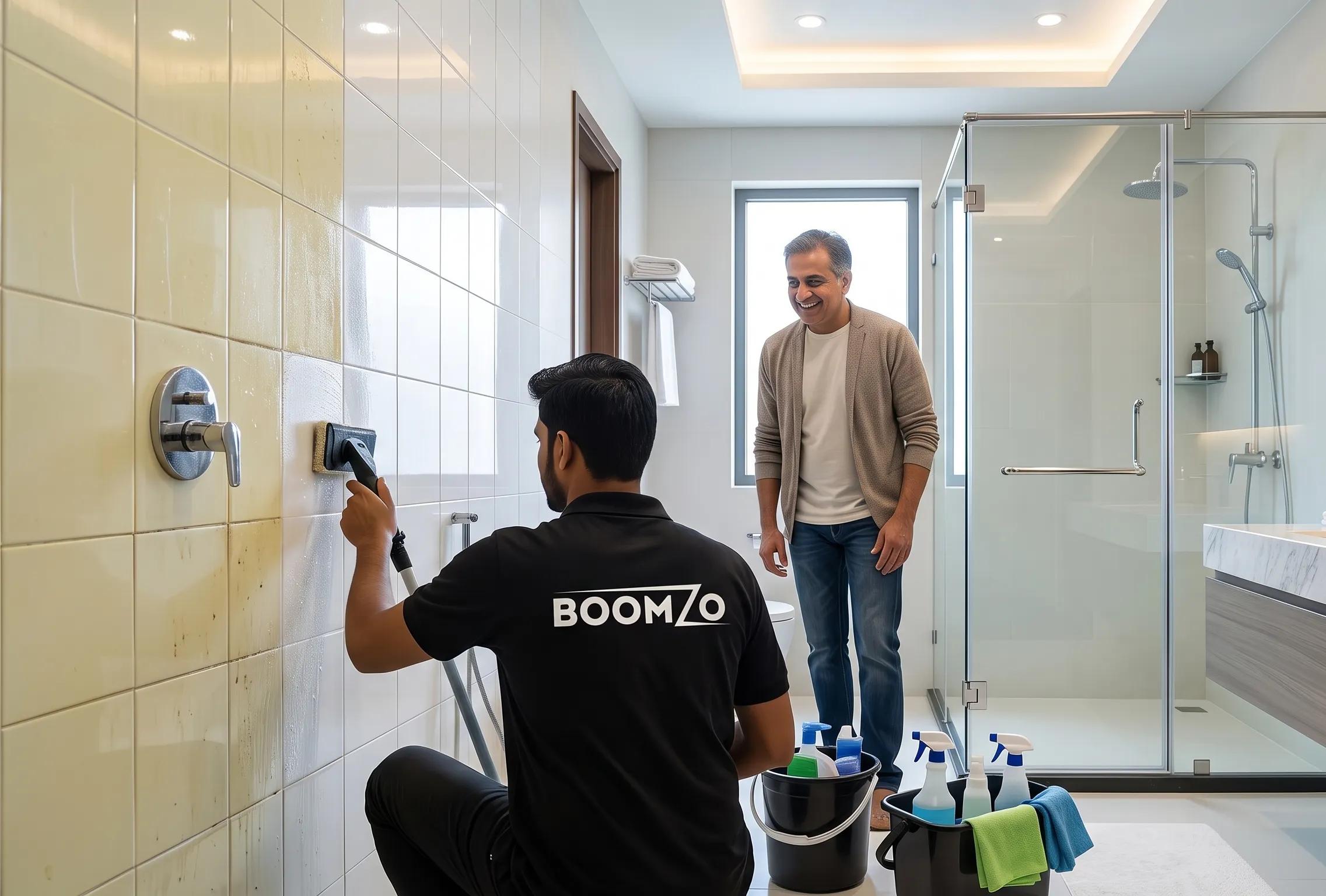
Best Cleaning Service in Agra
Amit noticed it first on a Sunday. He'd spent twenty minutes scrubbing his bathroom taps until they gleamed, the kind of clean where you can see your reflection in the chrome. By Wednesday, that shine was gone. A dull, chalky white ring had crept back around the base of the tap, right where the metal meets the wall.
He figured he'd just missed a spot the first time. So he went at it again, harder this time, with an old scouring pad. Same result a few days later. Then it showed up on the shower head. Then around the drain plate. That's when it stopped feeling like a cleaning problem and started feeling like something else was going on.
That "something else" is one of the most common issues homeowners run into when they call a Best Cleaning Service in Agra and it's rarely about effort. It's chemistry.
The Call That Started With a Question, Not a Sales Pitch
Amit called Boomzo on a Thursday evening, half-expecting to be talked into a full package he didn't need. Instead, the person on the other end a scheduling specialist named Jatin asked him a few things first.
"How long has this been happening?" Jatin asked.
"About three weeks now," Amit said. "I clean it, it comes back in days. Getting worse near the handles."
"Is it chrome or brass fittings?"
Amit checked. "Chrome, I think. Standard bathroom taps."
Jatin explained, in plain terms, that this pattern fast-returning white residue that worsens with scrubbing usually points to hard water mineral buildup reacting with soap, not a lack of cleaning. He walked Amit through what a proper descaling visit would look like: an inspection first, then treatment suited to chrome specifically, since the wrong chemical strength can dull or pit the finish. No upsell, no vague promises. Just a slot booked for the following Monday morning.
Monday Morning: The Inspection Before the Fix
The technician who showed up, Somesh, didn't reach for a bottle the moment he walked in. He spent the first several minutes just looking running a finger along the base of the tap, checking how thick the crust had gotten, testing a small patch of the finish.
"This isn't dirt building up," he told Amit. "This is calcium binding with the fatty acids in your soap. It hardens as it dries. The more you scrub it with an abrasive pad, the more tiny scratches you leave behind — and residue clings to scratches faster than it clings to smooth chrome."
It was the first time anyone had actually explained why this kept happening, rather than just promising to clean it again.
Somesh selected a non-abrasive, pH-balanced descaling solution suited for chrome plating — something strong enough to dissolve the mineral bond without stripping the metal underneath. That distinction, he said, is where a lot of DIY attempts go wrong: household descalers are often too weak to fully dissolve set-in buildup, or people use something acidic enough to work but harsh enough to dull the finish over time.
The Cleaning Itself: A Conversation Mid-Scrub
The actual treatment was handled by Sandeep, Boomzo's cleaning specialist, and Amit ended up hanging around the doorway for most of it, curious.
"Why does it always come back around the joints first?" Amit asked, watching Sandeep work a detail brush into the seam where the tap handle met the base.
"Water sits there longest," Sandeep said, not looking up. "Every other surface, water runs off and evaporates fast. In a joint like this, it pools for a few extra seconds each time you use the tap. Over weeks, that's where the mineral layer builds fastest."
He worked section by section the base of the taps, the showerhead nozzles, the handle joints — applying the solution, letting it sit, then clearing the dissolved residue with a micro-detail brush before rinsing thoroughly. The white crust that had resisted a scouring pad for three weeks came away in minutes once the right solution was actually breaking the mineral bond instead of just being pushed around by friction.
The last step was one Amit hadn't expected: a protective polish applied across all the treated surfaces. "This won't stop your water from being hard," Sandeep said. "Nothing will, short of a whole-house filtration system. But it makes it harder for new deposits to bond to the surface right away. You'll get more time between cleanings, not zero maintenance."
By the time he finished, the whole visit had taken a little under two hours.
Why This Keeps Happening in Agra Specifically
Agra's water supply runs fairly high in dissolved calcium and magnesium — the minerals that make water "hard." On their own, they're not harmful. The problem starts the moment they meet ordinary soap. The fatty acids in soap react with those minerals to form calcium stearate, a compound that doesn't dissolve back into water. It just dries in place, layer after layer, shower after shower.
This is also why scrubbing harder tends to backfire. Abrasive pads etch fine scratches into chrome and brass fittings, and those micro-grooves become new places for the film to grab onto — which is exactly what had been happening to Amit's taps for weeks before he made the call.
A proper Bathroom Deep Cleaning Service in Agra isn't really about scrubbing harder. It's about breaking the mineral bond chemically, reaching the joints and seams a sponge can't get into, and leaving a surface that resists rebuilding as fast.
What Amit Noticed a Month Later
The real test wasn't the day of the cleaning — it was three, then four weeks later. The taps hadn't gone back to looking the way they did on that first frustrating Sunday. Some very light residue had started forming again near the base, which Somesh had actually warned him about upfront: hard water doesn't stop being hard water. But it was nowhere close to the pace it had been building before, and a quick wipe-down was enough to keep it in check between visits.
Frequently Asked Questions
Question 1: Why does soap scum return so quickly on bathroom taps in Agra?
Answer 1: Agra's water supply has notably high mineral hardness. When it mixes with regular soap, it forms calcium stearate an insoluble film that hardens onto metal surfaces as it dries, often within days rather than weeks.
Question 2: Will descaling chemicals damage or discolour chrome fittings?
Answer 2: Not when the right formula is used. A trained technician tests the finish first and applies acid-balanced, metal-safe solutions made for chrome and brass, so the plating isn't stripped or pitted in the process.
Question 3: How long does a bathroom fitting descaling session usually take?
Answer 3: Most sessions run 1 to 2 hours, depending on how long the buildup has been forming and how many fixtures need treatment.
Ready for Fittings That Actually Stay Clean?
If soap residue keeps creeping back no matter how often you wipe it down, it's a water-chemistry problem — and it has a real fix. Boomzo offers professional bathroom deep cleaning across Agra, from inspection to descaling to protective polishing.
📞 Call Us: +91 843 991 1779
🌐 Visit Our Website : https://myboomzo.com/
📱 Download : Boomzo App