

When Neha Decided to Sanitize Her Bathroom After Her Child’s Illness, She Trusted the Best Cleaning Service in Agra for Professional Bathroom Sanitization Service
Best Cleaning Service in Agra
Neha works as a nurse at a private hospital in Agra. She spends her shifts around disinfectants, sterile trays, and hand-hygiene protocols so when her son came down with a stomach infection at home, she knew exactly how far germs travel once they land on a bathroom surface. A quick mop and a bit of phenyl were not going to be enough. She needed the Best Cleaning Service in Agra that actually understood hospital-level hygiene, not just a tidy-looking bathroom.
Why Regular Bathroom Cleaning Wasn't Enough After Her Son's Illness
Working in a hospital changes how you look at a bathroom at home. Neha has seen, up close, how quickly bacteria and viruses spread from a single flush handle or tap lever to everything else in the room. Chrome fittings, tile grout, and toilet seats hold onto pathogens far longer than most people assume.
Regular cleaning removes what you can see soap scum, dust, water spots. It doesn't touch what's living in the seams around a drain or under a tap handle. After her son's illness, that gap mattered to her in a way it might not to most people.
Cleaning vs. sanitization, in plain terms:
Regular cleaning aims to remove dirt, dust, and soap scum using water, mild soap, and a mop. It's wiped away as soon as it's applied, and it doesn't specifically target high-touch zones. It's fine for routine upkeep.
Bathroom sanitization aims to kill bacteria and viruses on surfaces. It uses hospital-grade disinfectants and steam equipment, left on surfaces long enough to actually neutralize pathogens, with high-touch zones mapped and treated first. It's what's needed after an illness, before or after a newborn or elderly family member moves in, or as a seasonal deep reset.
How to Book a Bathroom Sanitization Service in Agra
Neha called Boomzo's customer care line to ask about a proper post-illness clean. Shivam took the call, and instead of rushing through a standard pitch, he asked what had happened at home and what she was worried about.
She explained her son's recent illness and her own background in patient care. Shivam walked her through how the disinfectants worked, how long surfaces needed to stay wet for the chemicals to actually kill pathogens, and how soon the bathroom would be safe to use again. He booked a priority visit for the next available slot, since she didn't want to wait through a normal queue with a recovering child at home.
The High-Touch Zone Inspection Before Any Cleaning Starts
Jatin and Satish arrived first for the inspection. Rather than starting straight in with cleaning products, they walked the bathroom and mapped out every high-touch point: flush handle, faucet levers, door handle, toilet seat, shower knob, and the tile edges around the shower base.
Neha noticed they paid close attention to the corners near the floor drain, where soap residue tends to build up around the fittings and trap moisture. That's exactly the kind of spot she'd flag in a hospital ward audit, so it was a small but telling detail for her.
Based on what they found, the team chose non-toxic, hospital-grade disinfectants strong enough for genuine germ kill, but safe to be around a child once fully cured and dry.
Inside a Hospital-Grade Bathroom Sanitization Process
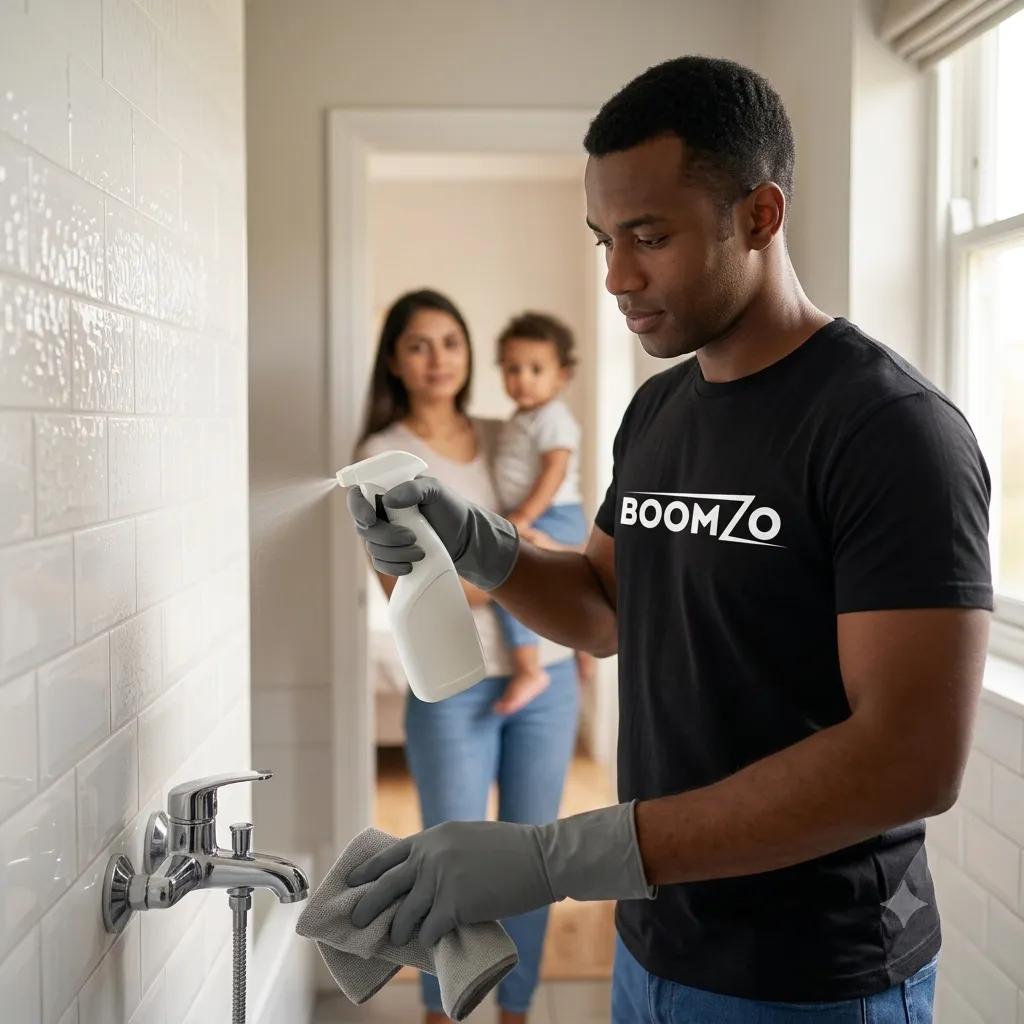
The actual sanitization was handled by Ajeet, whose job was to work through the room methodically rather than quickly.
Chemical disinfection: Broad-spectrum antimicrobial solution applied to walls, floor, washbasin, and toilet, left on each surface long enough to actually neutralize bacteria and viruses — not wiped off too soon.
Steam sanitization on tight seams: Around tap bases, drain rims, and flush buttons, where a regular cloth can't reach, Ajeet used steam equipment to get into the gaps.
Final rinse and residue check: All surfaces were wiped down with clean microfiber towels to clear chemical residue, leaving no strong smell or sticky film behind.
The whole visit took a little over an hour, which matched what Shivam had estimated on the phone.
Quick Answer
Sanitizing a bathroom after a household illness needs more than a mop and phenyl. It calls for hospital-grade disinfectants, steam treatment on high-touch fittings, and enough contact time for the chemicals to actually kill bacteria and viruses not just wipe them around. In Agra, Neha, a nurse at a private hospital, booked Boomzo's Bathroom sanitization service after her son recovered from an infection. The team inspected high-touch zones, applied broad-spectrum disinfectant, and used steam to reach tight seams around taps and drains, leaving the bathroom genuinely germ-free within about an hour.
Key takeaways:
Regular bathroom cleaning removes visible dirt; sanitization is a separate process aimed at killing bacteria and viruses on surfaces.
High-touch points — flush handles, tap levers, door handles, toilet seats — carry the highest germ load and need targeted attention.
A full sanitization visit typically takes 45–90 minutes and uses non-toxic disinfectants safe for children once dry.
Re-sanitizing every 1–2 months, or right after any illness in the house, keeps the effect from wearing off.
What a Nurse Looks For After a Deep Sanitization
As a nurse, Neha isn't easily impressed by a bathroom that just looks clean — she checks how it feels around the fittings, whether there's any lingering film near the drain, whether the grout still looks patchy under water residue near the base.
After the service, none of that was there. No soap buildup around the fixtures, no odor, and the surfaces stayed dry and streak-free well after the team left. For her, that mattered more than a general "sparkling clean" impression — it matched what she'd expect from a genuine Bathroom Sanitization Service in Agra, not just a cosmetic tidy-up.
Keeping the Bathroom Hygienic Between Professional Visits
A single sanitization visit resets the bathroom, but daily habits decide how long that reset lasts. Neha now wipes down the flush handle and tap levers with a disinfectant spray every evening, since these are the same high-touch points the Boomzo team flagged during the inspection. She also keeps the bathroom door and window cracked open for ventilation after every shower, which cuts down on the trapped moisture that lets bacteria multiply on tile grout.
None of this replaces a professional deep clean. It just stretches the gap between visits. For a household that's just been through an illness, most cleaning experts suggest a follow-up sanitization every one to two months, or sooner if anyone at home falls sick again — which is roughly the schedule Neha has settled into since her son recovered.
Bathroom Sanitization Process, Step by Step
Phone consultation — Discuss the reason for sanitization, book a priority slot, and get drying and safety timelines explained. Handled by Shivam, the booking specialist.
High-touch zone inspection — Map flush handles, tap levers, door handles, toilet seat, shower knobs, and tile edges. Handled by Jatin and Satish, the on-site inspection team.
Chemical disinfection — Apply broad-spectrum antimicrobial solution with sufficient contact time to neutralize pathogens. Handled by Ajeet, the sanitization specialist.
Steam sanitization — Treat tight seams around taps, drains, and flush buttons that a cloth can't reach. Handled by Ajeet.
Final rinse and check — Wipe surfaces clean of residue and confirm no odor or film remains. Handled by Ajeet.
Total visit time: roughly 45–90 minutes, depending on bathroom size.
Frequently Asked Questions
Question 1 : How does this differ from a regular bathroom cleaning?
Answer 1: Regular cleaning clears visible dirt and soap scum. A sanitization service uses hospital-grade disinfectants and steam treatment on high-touch zones specifically to kill viruses and bacteria, not just clean surfaces.
Question 2: Is the sanitization safe for kids and pets at home?
Answer 2: Yes. The disinfectants used are non-toxic and odorless once cured. Surfaces are generally safe to use again within 15–30 minutes of drying and ventilation.
Question 3: How long does a full bathroom sanitization visit take?
Answer 3: Around 45 to 90 minutes, depending on the size of the bathroom and how many fixtures need attention.
Question 4: Do I need to stay home during the service?
Answer 4: It helps to be present for the initial walkthrough so the team understands your specific concerns, but you don't need to be in the bathroom during the actual cleaning.
When Your Child Is Sick, Don’t Forget Bathroom Hygiene
After an illness, proper bathroom sanitization can help remove lingering dirt, germs, and unpleasant odors from frequently touched and hard-to-reach areas. If your bathroom needs more than routine cleaning, trust professional bathroom sanitization service in Agra for a thorough and hygienic clean. Boomzo helps make your bathroom feel fresh, clean, and ready for everyday use.
Book your bathroom sanitization service today and give your family a cleaner space.
📞 Call Us: +91 843 991 1779
🌐 Visit Our Website : https://myboomzo.com/
Download the Boomzo App: Get it on Google Play